
Why Modern Makers Are Rethinking Engraving Tools and Choosing Pneumatic Precision
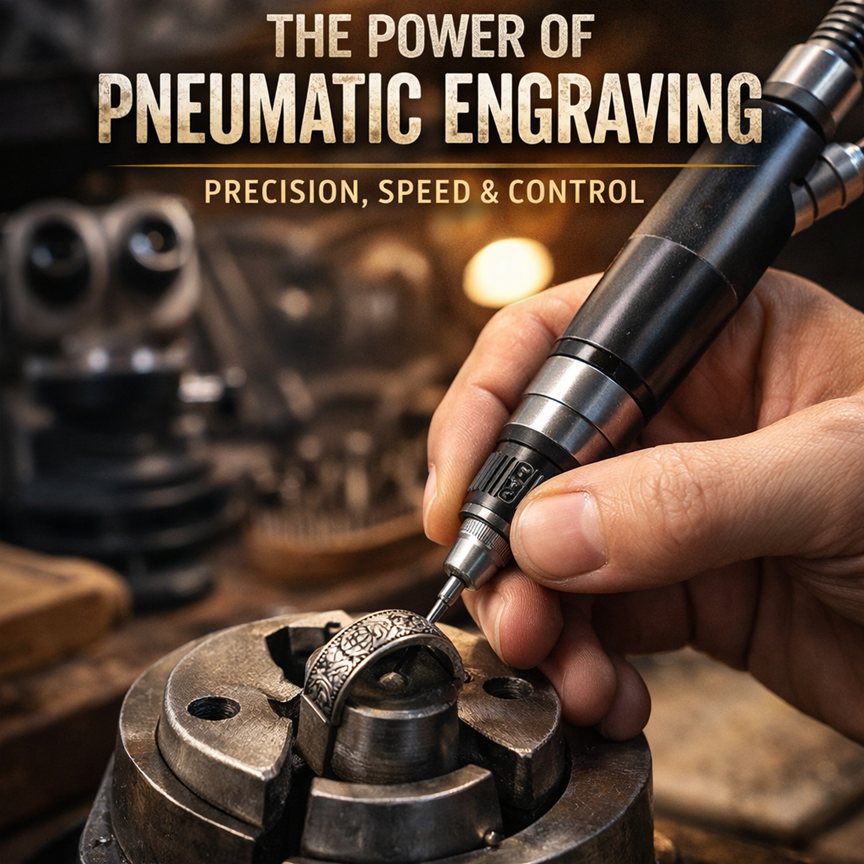
Every maker remembers the first time engraving felt truly difficult. Not because the design was complex, but because the hand simply couldn’t keep up. The line that looked perfect in the sketch suddenly wavered on metal. Pressure changed. The cut went too deep, or not deep enough. This moment is familiar to anyone who has spent real time engraving by hand, and it is usually the moment when people begin to question their tools.
For years, engraving has been taught as a discipline of endurance. You learn to control your hands, accept the fatigue, and work through discomfort. But as the craft evolves, more professionals are beginning to ask a different question: what if the tools could support the maker instead of challenging them?
This question has led many experienced engravers toward pneumatic engraving systems, a change that is quietly reshaping workshops around the world.
The Physical Reality of Traditional Engraving
Hand engraving has never been easy. Maintaining consistent pressure across a long cut requires strength, control, and concentration. Even slight fatigue can alter the depth of a line, and over time this physical strain becomes part of the job. Many engravers accept it as normal, but that doesn’t mean it’s necessary.
Long working sessions often result in stiff fingers and aching wrists. The body absorbs the cost of precision. For professionals working daily, this can shorten careers or force artists to reduce their workload. The problem is not skill. It is the method.
As expectations rise and projects demand more detail, the limitations of purely manual engraving become harder to ignore.
What Changes When Air Replaces Force
A pneumatic engraver uses compressed air to power the cutting action. Instead of pushing the tool forward with constant hand pressure, the engraver guides it while the system delivers consistent micro-impacts. This small change completely transforms the experience of engraving.
The first thing most users notice is how natural the movement feels. Lines flow more smoothly. Curves become easier to control. The hand is no longer fighting the metal, but guiding it. This shift allows engravers to focus on design rather than effort.
The difference is especially noticeable during long sessions, when fatigue would normally begin to affect precision.
Why Control Matters More Than Speed
Some assume pneumatic tools are about working faster. In reality, they are about working better. When the tool handles the cutting force, the engraver can focus entirely on direction, spacing, and rhythm. This leads to more consistent depth, cleaner lines, and better overall balance in the design.
This level of control is essential for fine jewelry, ornamental engraving, and detailed lettering, where small variations are immediately visible. Pneumatic systems provide stability without taking away the artist’s touch.
Why More Professionals Are Choosing Katway
As engraving tools evolve, the quality of the equipment matters more than ever. Katway has become a trusted name among professional makers because they design tools with real workshop needs in mind. Their systems are compact, reliable, and built for daily use rather than occasional projects.
Their pneumatic engraver collection offers a range of solutions that fit different working styles. Some users prefer simple, dedicated engraving units, while others choose integrated systems that combine engraving, micro motor, and heating functions into one compact machine. This flexibility allows makers to build a setup that grows with their skills instead of limiting them.
How Integrated Systems Improve Workflow
In modern workshops, space and organization matter. Integrated engraving systems reduce clutter by combining multiple functions into a single unit. This keeps the bench cleaner and makes switching between tasks faster and more intuitive.
When engraving, polishing, and detailed motor work all come from one system, the creative process feels smoother. Instead of stopping to reconfigure equipment, the maker stays focused on the work itself. Over time, this kind of efficiency makes a noticeable difference in both productivity and enjoyment.
The Importance of Long-Term Hand Health
One of the most overlooked benefits of pneumatic engraving is how it protects the body. Traditional engraving places constant stress on the hands, wrists, and shoulders. These injuries don’t appear overnight, but they accumulate slowly over years of work.
By reducing the physical force needed for each cut, pneumatic systems help engravers work longer and more comfortably. Many professionals see this as an investment not just in better tools, but in a longer, healthier career.
Where Pneumatic Engraving Makes the Biggest Impact
Pneumatic engraving has become popular across many fields because of its versatility. Jewelry engraving, stone setting, knife decoration, firearm engraving, and industrial marking all benefit from the consistency and control these tools provide.
In decorative metalwork, the difference is especially clear. Designs become more detailed, textures more refined, and mistakes less frequent. The tool supports creativity instead of restricting it.
Making Engraving Easier to Learn
For beginners, engraving used to be intimidating. The learning curve was steep, and early frustration often pushed people away from the craft. Pneumatic tools have changed this by removing the most difficult part of learning: pressure control.
With the tool handling the force, new engravers can focus on understanding movement and design. Skills develop faster, confidence builds, and the craft becomes more approachable without lowering standards.
Building a Complete Workshop with Confidence
Engraving is only one step in the metalworking process. Shaping, forming, polishing, and finishing are equally important. Katway provides tools that support the entire workflow, allowing makers to move smoothly from one stage to the next without changing systems or suppliers.
When tools are designed to work together, the workshop feels more organized and efficient. Less time is spent adjusting equipment, and more time is spent creating.
Choosing the Right Pneumatic Engraving System
Every workshop is different. Some makers need portability, while others prefer a fixed bench setup. Some work mainly with soft metals, while others engrave hard steel daily. Katway’s range of pneumatic engraving systems allows users to choose the configuration that best suits their needs and expand later as their work evolves.
This flexibility is especially important for independent makers who want tools that grow with them instead of forcing upgrades.
Why Pneumatic Engraving Is the Future of the Craft
Engraving has always evolved alongside its tools. From hand gravers to foot-powered systems, and now to air-driven precision, each step has made the craft more sustainable. Pneumatic engraving is simply the next stage in that evolution.
It doesn’t remove skill—it removes unnecessary struggle. When tools work with the hand instead of against it, creativity becomes easier to access, and craftsmanship reaches a higher level.
Final Thoughts
Great tools don’t just improve results. They make work sustainable. A pneumatic engraver allows makers to protect their hands, improve precision, and enjoy the process again. It turns engraving from a physical challenge into a controlled, creative experience.
For anyone serious about long-term craftsmanship, upgrading to a professional pneumatic engraving system is not just a technical decision. It is a commitment to better work, better health, and a better way of creating.
